
Customs Recordkeeping Requirements: The Five-Year Rule Explained
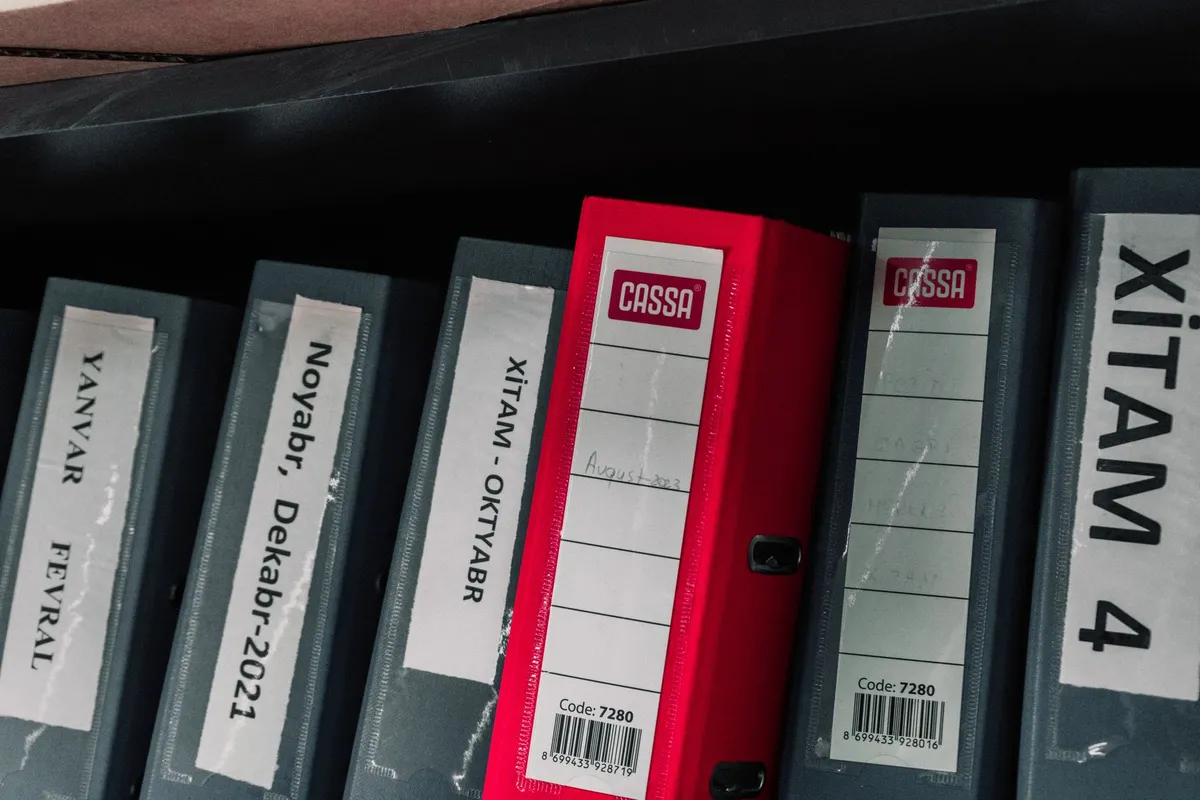
Under U.S. customs law, most importers, brokers, and other trade parties must retain records related to imported merchandise for five years from the date of entry. This obligation flows from 19 U.S.C. 1508 and 1509 and is implemented in detail by 19 CFR Part 163. Failing to produce required records on demand can trigger penalties, adverse inferences in audits, and liquidated damages claims against an importer's bond.
Who Must Keep Customs Records
The recordkeeping obligation applies broadly. Specifically, 19 U.S.C. 1508 and 1509 cover any person who:
- Imports merchandise into the United States
- Files a drawback claim
- Transports or stores merchandise while it is in bonded status
- Files a protest or other document with U.S. Customs and Border Protection (CBP)
- Acts as a customs broker on behalf of a client importer
- Operates as a surety on a customs bond
- Manufactures, sells, or transfers merchandise admitted into a foreign-trade zone
In practical terms, this means importers of record bear the primary burden, but customs brokers, freight forwarders, and other service providers have parallel obligations for records they create or receive in connection with a customs transaction.
The General Five-Year Retention Period
The statute establishes a general rule: covered records must be kept for five years from the date of entry, or five years from the date of the activity that generated the record, depending on the document type. For most import transactions, the clock starts on the date the merchandise is entered or released.
This five-year window is significant because it aligns closely with CBP's authority to assess duties and penalties. Understanding the interaction between recordkeeping deadlines and penalty statutes of limitations is important for compliance planning. For background on how CBP's penalty authority operates across time, see our article on Customs Penalty Statute of Limitations: 19 U.S.C. 1621 Explained.
When the Clock Starts
- Entry records: Five years from the date of entry.
- Drawback records: Three years from the date of payment of the drawback claim, or five years from the date of import of the merchandise used to support the claim, whichever is later.
- Records related to merchandise in a bonded warehouse or FTZ: Five years from the date the merchandise is withdrawn or otherwise disposed of.
The (a)(1)(A) List: Records CBP Can Demand at Any Time
19 CFR Part 163 contains what practitioners commonly call the "(a)(1)(A) list", a specific enumeration of entry records that CBP may demand production of within a set timeframe. These are records tied directly to the entry and admissibility of merchandise and include documents such as:
- Commercial invoices and pro-forma invoices
- Packing lists
- Bills of lading and airway bills
- Customs entry summaries and supporting worksheets
- Certificates of origin and other preferential-duty documentation
- Binding rulings relied upon at entry
- Broker powers of attorney
- Purchase orders and contracts relating to the imported goods
- Any other records required by statute or regulation for specific commodity types
When CBP issues a demand under 19 U.S.C. 1509, records on the (a)(1)(A) list must generally be produced within 30 days. CBP may grant a 30-day extension upon written request if the importer shows good cause. Failure to produce records within the required timeframe can result in penalties under 19 U.S.C. 1509(e) and may also support an adverse inference, meaning CBP can presume the missing records would have shown the entry to be incorrect.
Other Records: A Longer Production Window
For records not on the (a)(1)(A) list, CBP's demand triggers a longer initial response window, though the same five-year retention obligation applies. Importers should not interpret the longer response period as meaning those records are less important. CBP audits and focused assessments routinely sweep in correspondence, purchase contracts, price lists, and internal valuation worksheets that fall outside the core entry documents.
Format and Storage Requirements
19 CFR Part 163 does not require records to be kept in paper form. Electronic storage is expressly permitted, provided the system meets CBP's standards for completeness, accessibility, and integrity. Key requirements for electronic recordkeeping include:
- The system must be capable of producing legible, readable records on demand.
- The importer must maintain the software and hardware necessary to retrieve stored records throughout the retention period.
- CBP must be able to access, read, and audit the records without specialized assistance from the importer.
- Records may not be altered after they are created; audit trails must be preserved.
Cloud-based document management systems are widely used in trade compliance, but importers should confirm that their vendor agreements do not allow data to be deleted on a schedule shorter than five years, and that data can be exported in a readable format if the vendor relationship ends.
Third-Party Records Held by Brokers
A common misconception is that an importer can satisfy its own recordkeeping obligation by relying on its customs broker's file. The broker has an independent obligation to retain records, but that obligation does not substitute for the importer's. Importers of record should maintain their own copies of entry documents, commercial invoices, and supporting valuation records rather than assuming the broker's archive is sufficient.
Penalties for Recordkeeping Violations
CBP can assess monetary penalties for failure to maintain or produce records. The penalty structure under 19 U.S.C. 1509 distinguishes between:
- Failure to maintain or produce a record: A penalty can attach for each release of merchandise for which the record was required.
- Willful failure or the falsification of records: Penalty exposure is substantially higher than for non-willful failures.
Recordkeeping failures can also compound other customs violations. If CBP is auditing an entry under 19 U.S.C. 1592 and the importer cannot produce valuation or classification records, CBP may treat that as evidence of negligence or gross negligence. For a closer look at how 1592 cases proceed, see our guides on CBP Pre-Penalty Notice: The 1592 Penalty Process Step by Step and 19 USC 1592(d) Duty Demand: What CBP Can Collect Without a Penalty.
What Importers Should Do
- Map your record types against the (a)(1)(A) list. For every entry, confirm you have the core entry documents, commercial invoices, bills of lading, and origin documentation retained in an accessible system for at least five years from the entry date.
- Audit your electronic storage system annually. Verify that retrieval works, that no auto-deletion policies conflict with the five-year rule, and that the system produces readable output without proprietary software that could become unavailable.
- Establish a written recordkeeping policy. Document who is responsible for retaining each record type, where records are stored, and what the destruction schedule is. A written policy is evidence of reasonable care if CBP ever questions your compliance posture.
- Do not rely solely on your broker's files. Obtain and retain your own copies of entry summaries, commercial invoices, and any classification or valuation worksheets your broker prepared on your behalf.
This article is general information, not legal advice.
Recovering IEEPA tariff refunds? Get started with CustomsGenius to streamline your refund process.