
Customs Assists Valuation: Tooling, Molds, and Design Work
Key Points
- Under 19 U.S.C. 1401a(h)(1)(A), an "assist" is anything the importer supplies free of charge or at reduced cost for use in producing the imported merchandise, including materials, tooling, molds, dies, and engineering or design work performed outside the United States.
- The dutiable value of an assist must be added to the transaction value of the merchandise even if no money changes hands between the buyer and seller at the time of importation.
- Engineering, development, artwork, design work, and plans performed inside the United States are expressly excluded from the assist definition and are not added to dutiable value.
- CBP allows two recognized apportionment methods: spreading the assist's value across the first shipment, or spreading it across all anticipated shipments under a production run.
- Related-party transactions are a primary audit focus for assists because the cost or value of tooling and design work is easily buried in intercompany transfer prices or invoiced separately at zero.
On this page
- What an assist is and the statutory definition
- Which categories of assists are dutiable
- What is excluded: U.S.-origin design and engineering work
- Apportionment: spreading the assist value across shipments
- Assists in related-party and intercompany structures
- What importers should do
- Key references
An assist is any good or service that an importer provides to a foreign producer at no charge or at a reduced cost so that the producer can manufacture the imported merchandise. The assist's value must be added to the transaction value declared to CBP at the time of entry. Failing to declare assists is one of the most common customs valuation errors found during CBP audits and can result in unpaid duties, interest, and penalties.
The links in this article go to the primary documents: the statutes, regulations, and official agency pages themselves. Read the source.
What an assist is and the statutory definition
The definition of "assist" comes from 19 U.S.C. 1401a(h)(1)(A). The statute defines an assist as any of the following that the buyer provides directly or indirectly, free of charge or at a reduced cost, for use in the production or sale of merchandise for exportation to the United States:
- Materials, components, parts, and similar items incorporated in the imported merchandise
- Tools, dies, molds, and similar items used in producing the imported merchandise
- Merchandise consumed in producing the imported merchandise
- Engineering, development, artwork, design work, and plans and sketches undertaken outside the United States
The implementing regulations under 19 C.F.R. Part 152 elaborate on how CBP calculates and allocates assist values in practice.
The core concept is simple: if you hand a mold to your factory and pay nothing for it separately, the customs value of each shipment is understated unless you add back a portion of that mold's cost. Customs duties are assessed on the full economic value of what was produced, not just the cash that crossed the wire on a commercial invoice.
Which categories of assists are dutiable
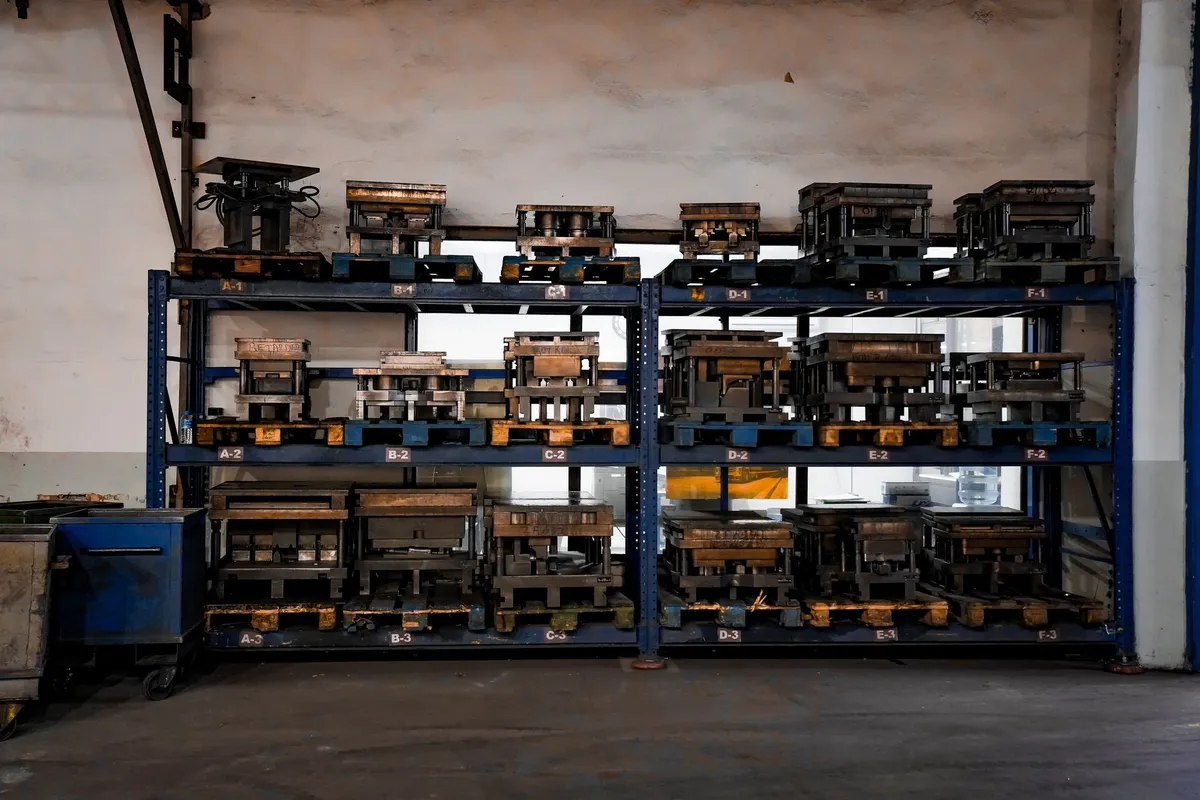
Physical items: tooling, molds, and dies
Tooling is the most common assist issue. When a U.S. importer pays for the fabrication of an injection mold, stamping die, casting pattern, or jig and ships it to (or has it made at) a foreign factory, that cost is an assist. It does not matter whether the tool is owned by the importer or the factory, or whether it remains overseas. What matters is that the importer bore the cost and the factory used it to make the imported goods.
The value to declare is generally what the importer actually paid to acquire or produce the tool. If the tool was manufactured by the importer domestically and then sent overseas, the cost includes the domestic production cost.
Materials and components supplied to the manufacturer
Raw materials, subassemblies, or components that the importer purchases and ships to the foreign producer for incorporation into the finished product are assists. The value is the acquisition cost to the importer, including freight to the factory if not already reflected in the price paid.
Engineering and design work performed outside the United States
If the importer commissions a foreign engineering firm or the foreign producer's engineering staff to develop blueprints, CAD files, product specifications, or industrial design drawings, and provides those services at no charge or reduced cost to the production process, the cost of that work is an assist. The geographic limitation is important: only work performed outside the United States is captured.
What is excluded: U.S.-origin design and engineering work
The statute explicitly excludes engineering, development, artwork, design work, and plans and sketches that are undertaken in the United States. If your domestic engineering team develops the product drawings and sends them to the factory, those U.S.-incurred costs are not added to dutiable value.
This distinction matters in practice. Many importers develop product concepts, industrial designs, and even prototypes in the United States, then send technical packages to overseas factories. Those domestic costs stay out of the assist calculation. Only the foreign portion of any collaborative development work, or fees paid to foreign design houses, would be captured.
Importers should document clearly which portions of any development project were performed in the United States versus abroad. In a CBP audit, the burden falls on the importer to substantiate the geographic split.
Apportionment: spreading the assist value across shipments
A mold or die is typically used across many production runs and shipments. CBP does not require the entire assist value to be added to the first shipment, though that is one permissible method. The two accepted approaches are:
Method 1: Charge to the first shipment
Add the entire assist value to the dutiable value of the first entry. This is administratively simple but can produce a large duty bill on that entry. It is most practical for low-cost tooling or single-run production.
Method 2: Pro-rate across the total anticipated production
Divide the total assist cost by the total number of units expected to be produced using that tool, then add the per-unit amount to each shipment's declared value. This spreads the duty burden proportionally across entries and is the more common approach for high-value molds with long production lives.
Whichever method an importer chooses, it must be disclosed to CBP and applied consistently. The importer typically declares the apportionment methodology on the entry documents or in a reconciliation filing. If the actual production run differs materially from the estimate, adjustments may be required.
Related to how payments flow between related parties, see also our article on Indirect Payment Customs Value: What Counts in the Price, which covers other forms of non-invoice value that affect declared dutiable value.
Assists in related-party and intercompany structures
Assists are a heightened risk in related-party import structures, where a U.S. parent or affiliate may supply tooling, molds, components, or intellectual property to a foreign manufacturing affiliate. Several scenarios arise frequently:
Tooling charged to intercompany accounts, not to the import entry
A parent company might capitalize a mold on its own books and record an intercompany charge to the foreign subsidiary, or simply absorb the cost with no intercompany charge at all. Neither accounting treatment eliminates the obligation to include the assist in customs value. The test is economic: did the importer bear a cost that benefited the foreign production process? If yes, an assist exists regardless of how the transaction is booked.
Transfer-priced goods where assists are embedded or excluded
When goods are priced under a transfer pricing agreement, the agreed intercompany price may or may not reflect tooling costs that the parent paid separately. Importers using transaction value in a related-party context must confirm that the declared price either already includes the assist value or that the assist is separately declared. Omitting it from both places understates dutiable value. For background on how transfer pricing intersects with customs valuation more broadly, see our guide on Transfer Pricing Customs Valuation: Serving Two Masters.
Royalties and design fees paid to affiliates
Payments for the use of intellectual property, design rights, or engineering know-how made to a related party as a condition of the sale of merchandise may also affect dutiable value, though the analysis for those payments follows a related but distinct statutory path. When the same related party both supplies design work and licenses IP, importers must separately evaluate whether design work performed abroad constitutes an assist and whether royalty payments are also includible in value.
CBP's audit focus
CBP's Focused Assessment program specifically tests whether importers have identified all assists and declared them correctly. Auditors request intercompany agreements, capital expenditure records, accounts-payable files, and tooling registers to identify costs paid by the U.S. importer that benefited a foreign factory. Penalties for material undervaluation can be severe, and good-faith errors are treated more favorably than intentional omissions, making accurate recordkeeping critical.
What importers should do
- Conduct an assist inventory. Review all capital expenditures, intercompany charges, and accounts-payable items for payments related to tooling, molds, dies, components shipped abroad, and foreign design or engineering services. Cross-reference these against your active import entry lines to confirm each assist has been declared.
- Document the apportionment method in writing. For each assist, record the total cost, the estimated production run, the per-unit allocation, and the entries to which the allocation has been applied. Retain this documentation for the full entry record retention period.
- Disclose proactively when you find gaps. If a review reveals past undeclared assists, consider a prior disclosure to CBP. Voluntary disclosure before CBP initiates an investigation typically results in materially lower penalty exposure than an omission discovered during audit.
- Align customs and tax teams in related-party structures. Transfer pricing agreements and customs valuation are governed by different rules, but the underlying facts overlap significantly. Ensure that both teams know when tooling costs, design fees, or component supplies change so that customs declarations are updated in real time.
Key references
- 19 U.S.C. 1401a - The customs valuation statute, including the assist definition at subsection (h)(1)(A)
- 19 C.F.R. Part 152 - CBP's implementing regulations on customs valuation and assist apportionment
- CBP Focused Assessment Program - CBP's audit framework, which treats assists as a primary valuation risk area
- Harmonized Tariff Schedule of the United States (USITC) - The official tariff schedule for classifying goods whose dutiable value is affected by assists
- CBP Trade Compliance and Enforcement resources - Agency guidance on importer obligations, including valuation compliance
Recovering IEEPA tariff refunds? Get started with CustomsGenius to streamline your refund process.