
CBP Form 3499: Permit to Manipulate, Examine, or Sample
Key Points
- CBP Form 3499, Application and Approval to Manipulate, Examine, Sample or Transfer Goods, is the permit request used when merchandise that is still under CBP custody needs to be handled, repacked, sampled, examined or moved.
- The underlying authority for manipulation in a bonded warehouse or other CBP-approved location is 19 U.S.C. 1562, implemented at 19 CFR 19.8 and 19 CFR 19.11.
- CBP Form 3499 covers goods in a bonded warehouse, a container station, or merchandise not yet released; it is not the Foreign Trade Zone activity permit, which is CBP Form 216.
- For recurring, routine operations a port director may grant blanket approvals covering a class of merchandise or a period of time, so each individual handling does not need a separate application.
- As of October 2026, filing practice for CBP Form 3499 varies by port and by the type of location, so confirm the current submission channel and any port-specific instructions with the port director or the warehouse proprietor before relying on an old routine.
On this page
- What CBP Form 3499 is
- At a glance
- Where does CBP Form 3499 come from?
- When is CBP Form 3499 filed and by whom?
- What operations does CBP Form 3499 cover?
- How is CBP Form 3499 filed and approved?
- Common CBP Form 3499 errors and what they cost
- How CBP Form 3499 relates to other CBP forms
- Frequently asked questions
- What importers and brokers should do
- Key references
CBP Form 3499, Application and Approval to Manipulate, Examine, Sample or Transfer Goods, is the written request a warehouse proprietor, importer, consignee or their broker files with the port director for permission to handle merchandise that remains under CBP custody, whether in a bonded warehouse, a container station, or in the period before release. It sits between arrival and release or withdrawal in the entry lifecycle: the goods are not yet duty-paid and free, so no one may open, repack, sort, sample, weigh or relocate them without a CBP permit. Approval is granted by CBP on the face of the same form, which then serves as the permit and the record of what was authorized.
The links in this article go to the primary documents: the statute, the regulations in 19 CFR part 19, and the official CBP forms pages themselves. Read the source.
At a glance
- Full name: CBP Form 3499, Application and Approval to Manipulate, Examine, Sample or Transfer Goods.
- Who prepares or uses it: bonded warehouse proprietors, container station operators, importers, consignees and licensed customs brokers acting for them; CBP signs the approval.
- When in the lifecycle: after arrival and while the merchandise is still in CBP custody, before release, withdrawal for consumption, exportation or transfer.
- System or channel: varies by port; submitted to the port director, commonly on paper or through a port-accepted electronic or email channel. Confirm the current channel with the port.
- Governing authority: 19 U.S.C. 1562; 19 CFR 19.8 and 19 CFR 19.11.
- Scope boundary: not a Foreign Trade Zone activity permit; FTZ activity is permitted on CBP Form 216.
- Related terms: CBP Form 300, CBP Form 7501, CBP Form 3495, CBP Form 3173, CBP Form 7533, CBP Form 7509, CBP Form 3347, CBP Form 5291, CBP Form 3124, FinCEN Form 105.
Where does CBP Form 3499 come from?
CBP Form 3499 exists because 19 U.S.C. 1562 allows merchandise in bonded warehouse to be cleaned, sorted, repacked or otherwise changed in condition, but only under CBP supervision and at the expense of the person requesting it, and only in ways that do not amount to manufacturing. The regulations implementing that statute, 19 CFR 19.8 for manipulation in a warehouse and 19 CFR 19.11 for merchandise in a container station, set out the application and approval mechanism that CBP Form 3499 carries out. The form is the paperwork face of a simple principle: while the government holds a revenue interest in uncleared goods, nobody touches them without a permit.
Because duties on warehoused merchandise are generally assessed on its condition at the time of withdrawal rather than at importation, manipulation under CBP Form 3499 can change the duty outcome. That is precisely why CBP wants an application describing the proposed operation before it happens, rather than a report afterward.
When is CBP Form 3499 filed and by whom?
CBP Form 3499 is filed before the proposed operation takes place, by the party with an interest in the merchandise or by the proprietor of the facility holding it. In practice the bonded warehouse proprietor files most of them, because the proprietor is the party whose bond and whose recordkeeping are on the line if goods are moved or altered without a permit. An importer or its broker files when the importer initiates the request, for example to draw a sample for laboratory testing, to let a prospective buyer inspect, or to repack a damaged pallet before withdrawal.
Timing matters more than most teams expect. CBP Form 3499 must be approved before the work starts, and the approval may specify whether a CBP officer will supervise the operation or whether supervision is waived. Starting a repack on the strength of an unsigned application is an unauthorized manipulation, regardless of how routine the operation is.
What operations does CBP Form 3499 cover?
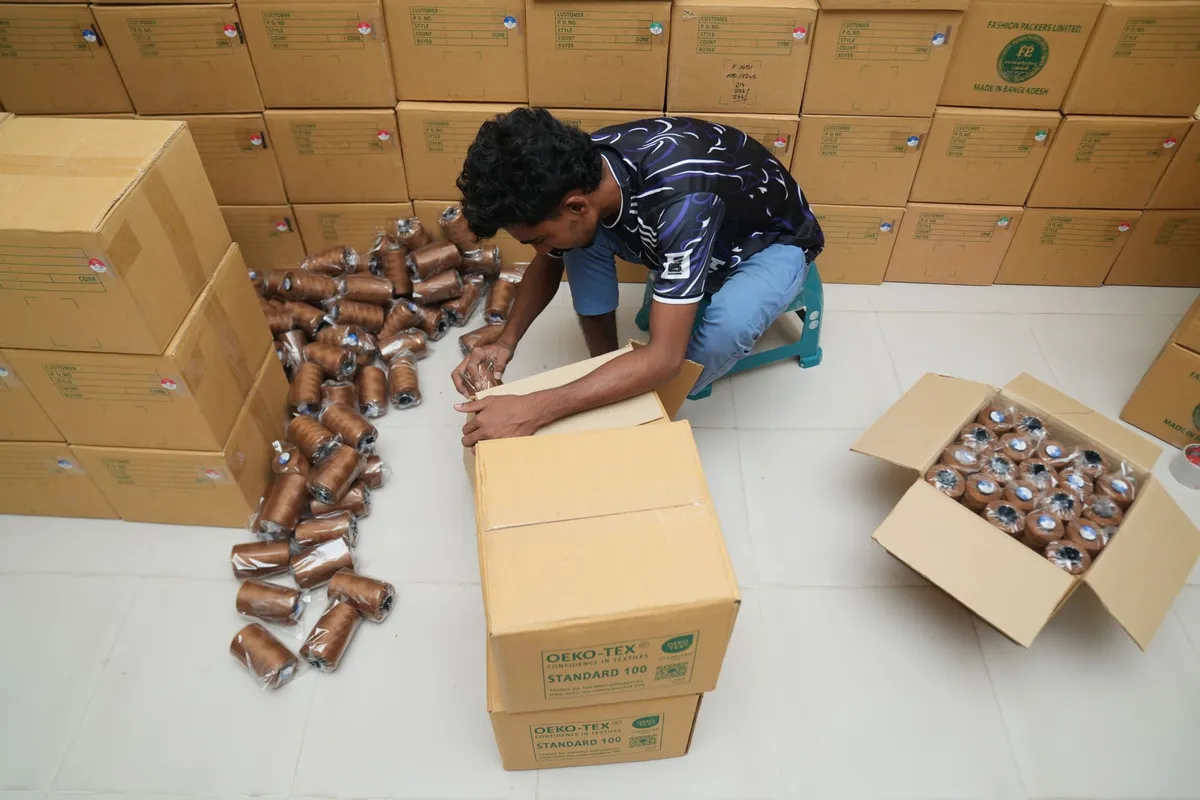
CBP Form 3499 covers manipulation, examination, sampling and transfer of merchandise in CBP custody, and the application has to describe the operation specifically enough for CBP to evaluate it. Typical requests include repacking from shipping cartons into retail packs, sorting mixed lots, consolidating or breaking down pallets, weighing or gauging, drawing samples for testing or for customer approval, allowing an examination by the importer or a surveyor, and transferring merchandise from one bonded location to another or between sections of the same facility.
What CBP Form 3499 does not cover is manufacturing. Operations that create a new and different article with a distinct name, character or use fall outside the manipulation authority in 19 U.S.C. 1562 and belong in a different program. If a proposed operation sits near that line, describe it in full on the application and let CBP make the call, rather than characterizing it loosely as repacking.
Blanket approvals
For operations that repeat continuously, CBP Form 3499 does not have to be filed shipment by shipment. The regulations contemplate blanket approvals, under which a port director authorizes a described class of manipulation at a named facility for a stated period, with the proprietor keeping records of each operation performed under the blanket. Blanket approvals are a port-level discretionary grant: confirm the scope, duration, renewal expectations and recordkeeping conditions with the port director, and treat anything outside the described class as requiring its own CBP Form 3499.
How is CBP Form 3499 filed and approved?
CBP Form 3499 is submitted to the port director having jurisdiction over the merchandise, and the same form carries CBP's approval block, so the executed document is both the application and the permit. Submission mechanics differ: some ports take the form on paper at the entry branch, some accept scanned submissions, and some route it through the assigned warehouse officer. Because practice is not uniform nationally, confirm the accepted channel and any local cover-sheet or lead-time expectations with the port before you need an approval in a hurry.
The approved form should be retained with the warehouse or container station records for the merchandise, tied to the warehouse entry and to the inventory records that support the proprietor's annual reconciliation on CBP Form 300, Bonded Warehouse Proprietor's Submission, the proprietor's annual inventory reconciliation that CBP uses to check the warehouse's books against its physical inventory. An unexplained change in package counts or weights is exactly the discrepancy a CBP Form 3499 on file resolves.
Common CBP Form 3499 errors and what they cost
The most common CBP Form 3499 failure is doing the work first and papering it later, which leaves the proprietor holding an unauthorized manipulation and a custodial bond exposure. Other recurring problems:
- Descriptions too vague to evaluate, such as "repack as needed," which invite rejection or an approval narrower than the operation actually performed.
- Operating outside the terms of a blanket approval, for example manipulating a commodity class or at a location the blanket never named.
- Failing to record quantities before and after, so the warehouse ledger and the physical inventory diverge and cannot be reconciled on CBP Form 300.
- Treating a transfer between facilities as a purely internal move when it is a transfer of goods in CBP custody requiring permission.
- Using CBP Form 3499 for Foreign Trade Zone activity. FTZ operations are permitted on CBP Form 216; the two are not interchangeable.
Because manipulation can change the quantity, condition and sometimes the classification of the goods, errors here surface later on the CBP Form 7501, Entry Summary, the declaration of classification, value, origin, duties, taxes and fees filed in ACE within 10 working days of release or with the entry. A withdrawal declared on quantities that do not match the permitted manipulation is a correction waiting to happen.
How CBP Form 3499 relates to other CBP forms
CBP Form 3499 governs handling while goods are in custody; several neighboring forms govern how the goods got there, who answers for the duties, and how they leave. Arriving land border and small vessel cargo is manifested on CBP Form 7533, Inward Cargo Manifest for Vessel Under Five Tons, Ferry, Train, Car, Vehicle, etc. and air cargo on CBP Form 7509, Air Cargo Manifest, the carrier's declaration of cargo on an arriving aircraft, now filed electronically through ACE air manifest with the paper form as the fallback. Goods admitted under a temporary importation bond are exported on notice under CBP Form 3495, Application for Exportation of Articles Under Special Bond, and the TIB period is extended on CBP Form 3173, Application for Extension of Bond for Temporary Importation, in one-year increments up to three years total.
On the liability side, CBP Form 3347, Declaration of Owner and its companion 3347A, Declaration of Consignee When Entry Is Made by an Agent, transfer or confirm duty liability on an entry. A broker acting for the importer in filing CBP Form 3499 does so under the written authority documented on CBP Form 5291, Power of Attorney, the optional CBP format for the authority an importer gives a licensed broker to transact customs business in its name; the license behind that broker was obtained on CBP Form 3124, Application for Customs Broker License, filed under 19 CFR part 111. Two forms sit entirely outside this chain and should not be confused with it: CBP Form 216, the FTZ activity permit, and FinCEN Form 105, Report of International Transportation of Currency or Monetary Instruments (CMIR), the currency report filed with CBP and not a customs entry form at all.
Frequently asked questions
Is CBP Form 3499 the same as the FTZ permit?
No. CBP Form 3499 permits manipulation, examination, sampling and transfer of merchandise in CBP custody in a bonded warehouse, container station or before release. Foreign Trade Zone activity is permitted on CBP Form 216, and filing CBP Form 3499 for an FTZ operation does not create a valid permit.
Can one CBP Form 3499 cover repeated operations?
Yes, where the port director grants a blanket approval. Under a blanket, CBP Form 3499 is approved once for a described class of operations at a named facility for a stated period, and the proprietor records each operation performed under it. Confirm scope and duration with the port director, because anything outside the approved description still needs its own CBP Form 3499.
Does manipulation under CBP Form 3499 change the duty owed?
It can. Duties on warehoused merchandise generally turn on the condition of the goods when they are withdrawn, so a repack, sort or separation permitted on CBP Form 3499 may change the quantity, condition or classification that gets declared. Work the classification question through before you file, not after the pallets are open.
Who signs CBP Form 3499?
The applicant, typically the bonded warehouse proprietor, the importer, the consignee or a licensed broker acting under a power of attorney, signs the application portion of CBP Form 3499, and CBP signs the approval portion. The executed form is the permit, so keep the signed copy with the warehouse records.
What importers and brokers should do
- Confirm with the port director how CBP Form 3499 is submitted at your port, how much lead time the warehouse officer expects, and whether supervision will be required or waived for your type of operation.
- If your facility performs the same manipulation repeatedly, ask the port director about a blanket approval and document exactly what class of merchandise, what operations and what period it covers.
- Tie every approved CBP Form 3499 to the warehouse inventory records so before-and-after quantities reconcile cleanly on CBP Form 300, and so the withdrawal entry summary matches the permitted operation.
- Review the current text of 19 CFR 19.8 and 19 CFR 19.11 and the CBP forms page before updating internal procedures, since form revisions and port practice change independently of each other.
Key references
- 19 U.S.C. 1562: the statute authorizing manipulation of merchandise in bonded warehouse under CBP supervision.
- 19 CFR part 19, including 19 CFR 19.8 and 19 CFR 19.11: the regulations on manipulation in bonded warehouses and in container stations.
- CBP forms library: current versions and instructions for CBP Form 3499 and the related forms discussed above.
- Harmonized Tariff Schedule of the United States: the classification and rate source for merchandise withdrawn after manipulation.
Working through tariffs on real entries? Try the free duty calculator, then see plans for the full toolkit.