
Fee code 501: Harbor Maintenance Fee Class Code in ACE Explained
Key Points
- Fee code 501 is the ACE class code for the Harbor Maintenance Fee (HMF), charged at 0.125 percent of value on cargo unloaded from a vessel at a designated port under 19 CFR 24.24.
- HMF does not apply to air, rail, or truck cargo, and HMF charged on those modes or omitted on vessel cargo is the most common fee finding.
- ABI software assesses HMF at entry summary under class 501, listed in CATAIR Entry Summary Create/Update (September 2025) AE Table 6, while the CBP Form 7501 (02/26) instructions carry HMF in the header fee summary rather than at the line item level.
- Foreign trade zone admissions pay HMF quarterly on CBP Forms 349 and 350 instead of on each entry summary.
- Fee code 501 is separate from fee code 499 for the Merchandise Processing Fee and has nothing to do with port terminal charges.
On this page
- At a glance
- What does fee code 501 cover?
- When and how is fee code 501 reported?
- Common fee code 501 errors and what they cost
- How does fee code 501 interact with other entry data elements?
- Frequently asked questions
- What importers and brokers should do
- Key references
Fee code 501 is the ACE user fee accounting class code for the Harbor Maintenance Fee (HMF), the fee assessed on commercial cargo unloaded from a vessel at a designated port. Customs brokers and self-filing importers report fee code 501 on the entry summary, usually through ABI software that computes the fee automatically for vessel-mode entries. It is a different code from fee code 499, which carries the Merchandise Processing Fee.
This entry reflects requirements as of November 2026. The links in this article go to the primary documents: the regulations, CBP forms, and technical specifications themselves. Read the source.
At a glance
- Full name: ACE user fee accounting class code 501, Harbor Maintenance Fee
- Who prepares or uses it: Customs brokers and ABI self-filers; CBP reviews it at entry summary
- When in the lifecycle: Entry summary for vessel-mode entries; quarterly for foreign trade zone admissions
- System or channel: ACE via ABI; on paper, the header fee summary of CBP Form 7501; CBP Forms 349 and 350 for FTZ admissions
- Rate: 0.125 percent of value
- Governing authority: 19 CFR 24.24
- Technical specification: CATAIR Entry Summary Create/Update (September 2025) AE Table 6
- Related terms: fee code 499, entry type 21, entry type 11, SPI codes
What does fee code 501 cover?
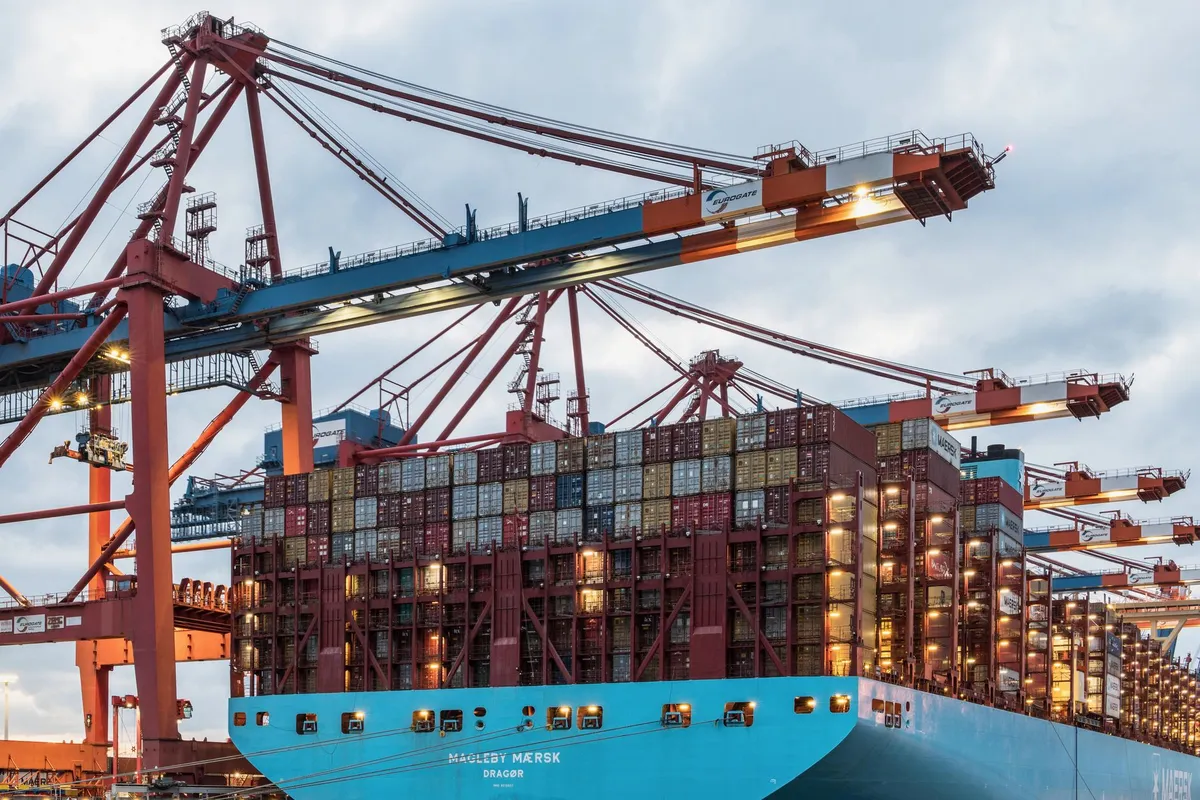
Fee code 501 covers only the Harbor Maintenance Fee that 19 CFR 24.24 imposes on commercial cargo unloaded from a vessel at a designated port. The regulation sets the fee at 0.125 percent of the value of the cargo and states that it does not apply to cargo arriving by air, rail, or truck. The trigger is vessel unloading at a designated port, so the mode of transport and the port of unlading decide whether the code belongs on the entry at all.
Exemptions
Not every vessel shipment owes HMF. Exemptions are set out in 19 CFR 24.24(c) and (e). Read those paragraphs directly before removing fee code 501 from a vessel entry, and keep the support for any exemption claim in the entry file, because CBP will look for it if the fee is missing.
What fee code 501 is not
Fee code 501 is not the Merchandise Processing Fee. MPF is reported under fee code 499 (ACE user fee accounting class code 499, Formal Merchandise Processing Fee), covered in our guide to fee code 499. Fee code 501 is also not a port terminal charge, wharfage, or any private fee billed by a terminal operator; those never appear in the ACE fee fields.
When and how is fee code 501 reported?
Fee code 501 is reported at entry summary, where the broker's ABI software assesses HMF on vessel-mode entries and transmits it under class 501. The class code itself is listed in CATAIR Entry Summary Create/Update (September 2025) AE Table 6, which is the authoritative list of fee class codes for ACE entry summaries.
ABI transmission
In practice, the software looks at the mode of transportation and the port of unlading, applies 0.125 percent to the qualifying value, and populates fee code 501 in the entry summary. Because the calculation is automated, the inputs drive the result: a wrong mode code or an incorrect value will produce a wrong HMF amount without any visible warning. Confirm record layouts and field positions in the current CATAIR rather than relying on vendor defaults.
Paper CBP Form 7501
The CBP Form 7501 (02/26) instructions direct that all fees except HMF are reported at the line item level. HMF is the exception: it is carried in the header fee summary of the form. Brokers who check a printed 7501 against the ABI transmission should expect to find fee code 501 in the summary block, not beside each line.
Foreign trade zone admissions
Cargo admitted to a foreign trade zone does not pay fee code 501 entry by entry. HMF on FTZ admissions is paid quarterly on CBP Forms 349 and 350. Confirm the current filing procedures and due dates for those forms with CBP or your zone operator.
Common fee code 501 errors and what they cost
Fee code 501 errors are the most common fee finding CBP raises, and they fall into two patterns: HMF charged on air, rail, or truck cargo, and HMF omitted on vessel cargo.
- Wrong mode: HMF charged on an air, rail, or truck shipment overpays the importer and signals a data problem in the entry.
- Missing on vessel cargo: An entry for goods unloaded from a vessel at a designated port without fee code 501 underpays the fee unless an exemption in 19 CFR 24.24(c) or (e) applies and is documented.
- Line versus header confusion: On paper, putting HMF at the line item level conflicts with the CBP Form 7501 (02/26) instructions.
- Mixing up codes: Reporting HMF under fee code 499, or MPF under fee code 501, misstates both fees.
Underpayments generally require correction and payment of the shortfall, and repeated findings can draw closer review of an importer's entries. Confirm the correction route for a specific entry with your broker or CBP.
How does fee code 501 interact with other entry data elements?
Fee code 501 depends on the same entry data that drives duty calculation, so it rarely stands alone.
- Entry types: Whether and when HMF is collected on entry type 11 (ACE entry summary type code 11, Informal, Free and Dutiable), entry type 21 (ACE entry summary type code 21, Warehouse), or entry type 23 (ACE entry summary type code 23, Temporary Importation under Bond, under HTSUS 9813) should be confirmed in the current CATAIR. See our guides to entry type 21 and entry type 11. Entry type 86, the ACE cargo release entry type for Section 321 (19 U.S.C. 1321) de minimis shipments at or under $800, is a release type rather than an entry summary type.
- SPI codes: Special program indicator codes, the HTSUS special-rate symbols claimed beside the HTS number, can change duty and MPF treatment. Do not assume an SPI code removes fee code 501; confirm against 19 CFR 24.24 and the CATAIR.
- Chapter 99 reporting order and secondary tariff lines: The Chapter 99 reporting order (Chapter 98, Chapter 99 duty numbers by program, other Chapter 99, then the Chapter 1-97 number last) and any secondary tariff line, an additional Chapter 98 or 99 HTS number transmitted in the same line, affect how value is presented on each line. Check that HMF value is not counted twice across tariff records. Numbers are on the Harmonized Tariff Schedule; see also Decoding Chapter 99 With Automation.
- Reporting quantity UOM: The reporting quantity UOM, the HTSUS-prescribed unit for net quantity, affects specific duties but not HMF, which is computed on value.
- CEE assignment: An importer's CEE assignment (Center of Excellence and Expertise assignment, CBP's placement of an account under one of ten industry Centers) determines which Center typically handles post-release questions on fee code 501 findings.
Frequently asked questions
Does fee code 501 apply to air freight?
No. Fee code 501 applies to cargo unloaded from a vessel at a designated port, and 19 CFR 24.24 states that HMF does not apply to cargo arriving by air, rail, or truck.
What rate is charged under fee code 501?
Fee code 501 is charged at 0.125 percent of the value of the cargo, as set in 19 CFR 24.24.
Where does fee code 501 appear on a paper CBP Form 7501?
Under the CBP Form 7501 (02/26) instructions, fee code 501 is carried in the header fee summary, because all fees except HMF are reported at the line item level.
How do FTZ users pay fee code 501?
HMF on foreign trade zone admissions is paid quarterly on CBP Forms 349 and 350 rather than through fee code 501 on each entry summary.
What importers and brokers should do
- Audit recent entries for fee code 501 on non-vessel modes and for vessel entries missing it, since these are the most common fee findings.
- Verify that mode of transportation and port of unlading are correct in ABI, because they drive the automatic 501 assessment.
- Document any exemption claimed under 19 CFR 24.24(c) or (e) in the entry file.
- For FTZ operations, calendar the quarterly CBP Forms 349 and 350 filings and confirm current procedures with CBP.
Key references
- 19 CFR 24.24: Harbor Maintenance Fee rate, scope, and exemptions in paragraphs (c) and (e).
- CBP ACE CATAIR: Entry Summary Create/Update (September 2025), AE Table 6 listing class 501.
- CBP Forms: CBP Form 7501 (02/26) instructions and CBP Forms 349 and 350.
- Harmonized Tariff Schedule of the United States: official tariff numbers, including Chapters 98 and 99.
- 19 U.S.C. 1321: Section 321 de minimis authority referenced for entry type 86.