
Supreme Court Oral Arguments in V.O.S. Selections
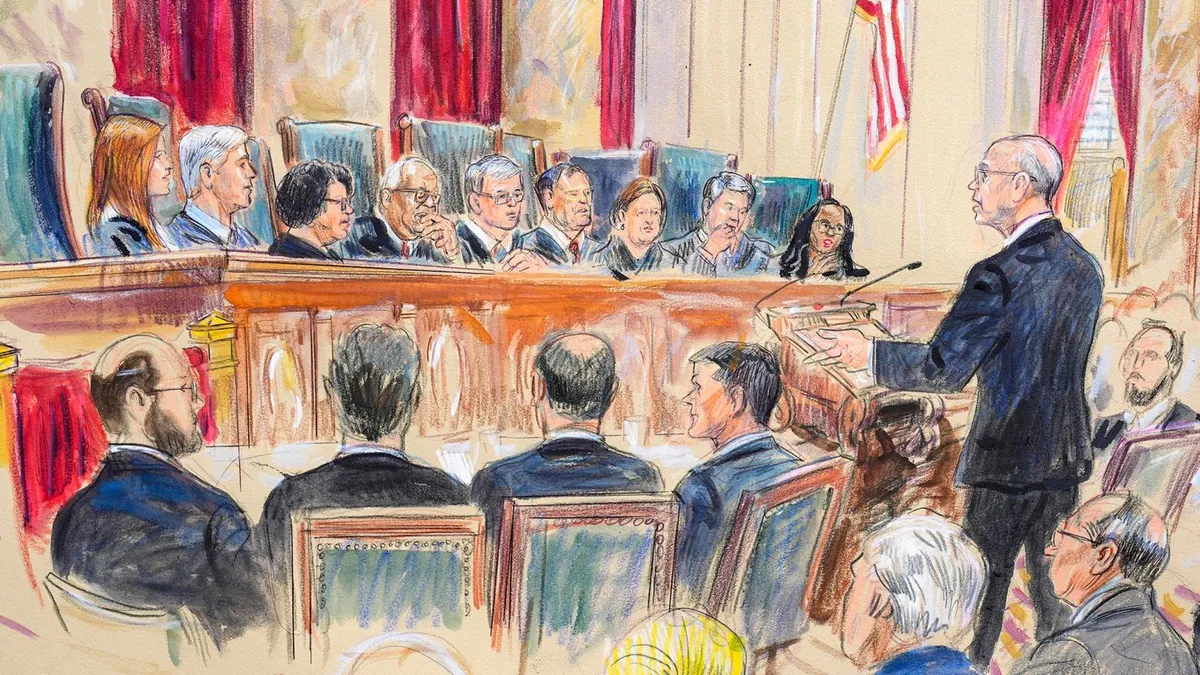
On November 5, 2025, the Supreme Court of the United States heard oral arguments in the consolidated cases of Learning Resources, Inc. v. Trump and Trump v. V.O.S. Selections, Inc., the litigation that would ultimately determine whether the International Emergency Economic Powers Act authorizes the president to unilaterally impose tariffs on imports. The stakes were enormous: billions of dollars in duties collected since early 2025 hung on the outcome.
How We Got Here
In February 2025, President Trump announced tariffs on Canada, Mexico, and China, citing IEEPA as the statutory authority. The following April, the administration announced the sweeping global "Liberation Day" tariffs, again under IEEPA. Multiple lawsuits from affected companies and U.S. states were filed almost immediately.
The lower courts moved quickly. In May 2025, the District Court for the District of Columbia ruled in Learning Resources that the tariffs were unconstitutional. Separately, the United States Court of International Trade ruled in Trump v. V.O.S. Selections that the president does not have the authority to use IEEPA to set tariffs, and permanently enjoined the government from enforcing them. Both courts stayed their injunctions to allow the government to appeal.
The CIT's ruling was upheld on appeal by the en banc Federal Circuit in August 2025. In September, the Supreme Court granted both petitions for certiorari and consolidated them into a single case, expediting the schedule for oral arguments.
What the Justices Asked
During oral arguments, court observers noted that a majority of the justices expressed skepticism toward the government's rationale for the tariffs. Several justices pressed the government on whether there is any meaningful limiting principle to presidential authority under IEEPA. If the statute authorizes tariffs, does it also authorize quotas, embargoes, or the complete prohibition of imports from a particular country? The government maintained that the statutory text is intentionally broad and that political accountability serves as the primary check on presidential action.
Justices also questioned both sides on the practical consequences of invalidating the tariffs, including the status of billions in duties already collected and whether importers would be entitled to refunds.
The Decision
On February 20, 2026, the Court issued its opinion in Learning Resources, Inc. v. Trump, 607 U.S. ___ (2026). The Court held that IEEPA, an economic sanctions law, does not authorize the president to unilaterally set tariffs, vacating many of the tariffs implemented during the second Trump administration. On jurisdictional grounds, the Court ruled that such matters fall within the exclusive jurisdiction of the Court of International Trade, dismissing the D.C. district court case and affirming the V.O.S. Selections rulings against the tariffs.
What This Means for Importers
The ruling means that duties collected under IEEPA-based executive orders are now refundable. The window for filing refund claims is open but finite, and the firms that have maintained organized documentation, preserved their entry data, and are prepared to file will be the ones positioned to recover. For brokerages managing large entry volumes, the ability to systematically identify every affected entry and generate filing-ready refund packets is no longer a competitive advantage. It is an operational necessity.
Preparing for IEEPA refund recovery? Get started with CustomsGenius to get started.